User Research - Course Project
This UX Research project was conducted as part of my User Research certification course at the UX Design Institute. The project’s objective was to understand the goals, behaviors, and user experience of consumers who use food delivery apps.
Intro
Role
Lead Researcher
Figjam
Zoom
Letsview
Google Forms
Tools
December ‘24 - March ‘25
4 months
Duration
Food delivery is a booming business and competition is fierce among the many app options available to hungry consumers. We want to develop a one-stop-shop platform that allows users to seamlessly search across different food delivery apps to compare offerings and prices, enabling them to find the best deal with ease.
Before the platform enters the design stage, we want to understand the goals, behaviors, context, and experiences of current food delivery app users.
Background
There’s limited insight available for how users interact with and experience current food delivery apps. To gain a better understanding, I conducted UX research on one of the most popular food delivery apps in the United States, UberEats.
Problem
Research Plan
What motivates users to use a food delivery app?
Research Questions
Which factors influence a user’s decision to choose one food delivery app over another?
Which offerings and features are most valuable to users when choosing a food delivery app?
How do users navigate and interact with food delivery apps?
What pain points do users have when using a food delivery app?

Methodology

Interviews
Usability Tests
Surverys
Age 25-34
High level of technical literacy
Annual Income: $40,000+
N = 3
(Usability Tests and Interviews)
Recruitment
Has experience using more than one food delivery app
Regularly orders food delivery (2x or more per week)
Analysis
Affinity diagram
Deliverables
Slide deck presentation
Research
I recruited 3 interview candidates and conducted the sessions remotely via Zoom. During the interviews, I asked each user 8 open-ended questions focused on their motivations, experiences, and habits when ordering food delivery from a mobile app.
Interviews
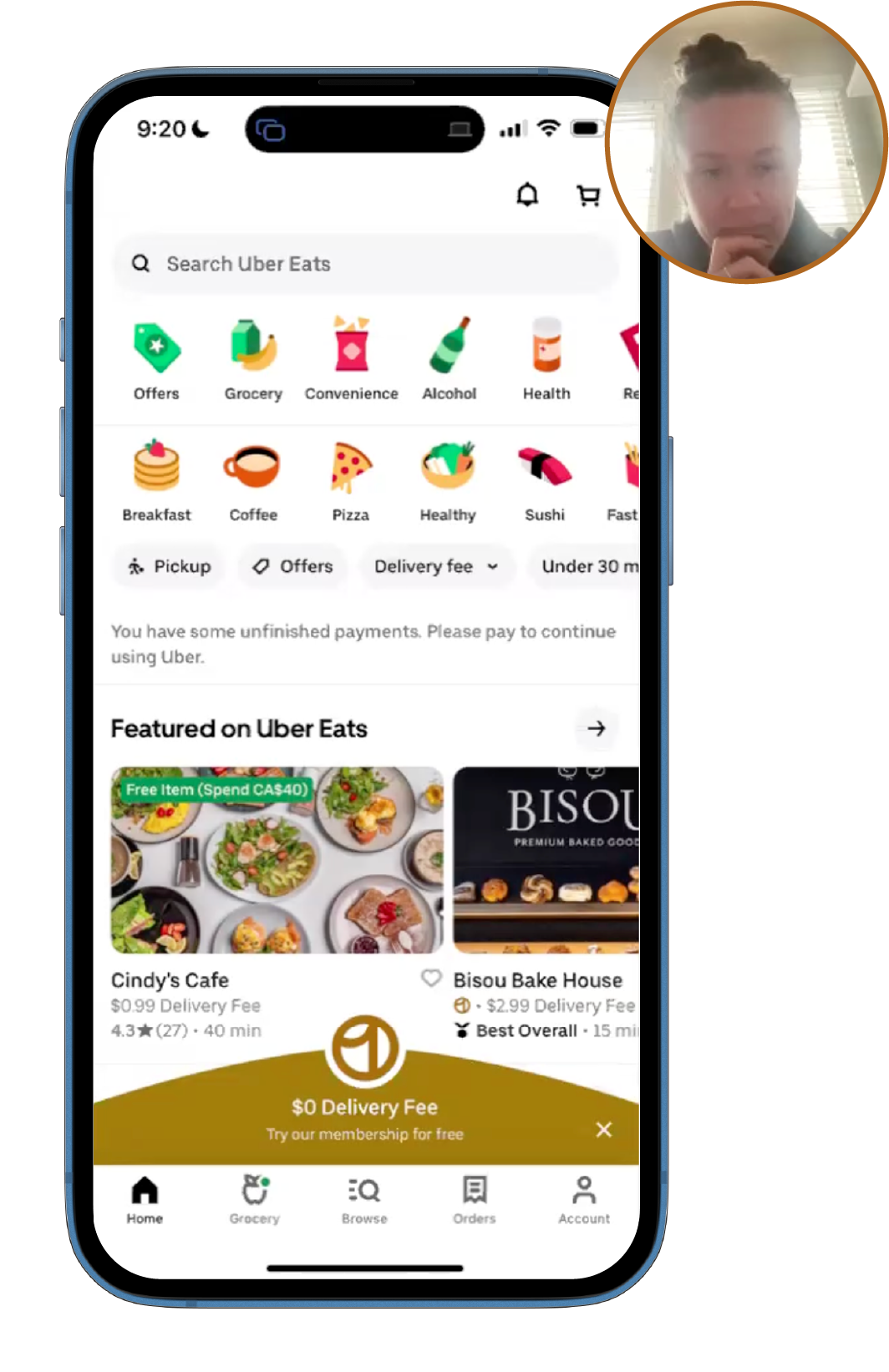
With the same 3 participants recruited for the interviews, I conducted moderated usability tests remotely using Zoom and Letsview. During each session, users were given a set of tasks to perform within a specific food delivery app. Each task required the user to enact a scenario, which showcased their unique behaviors within the app.
Usability Tests
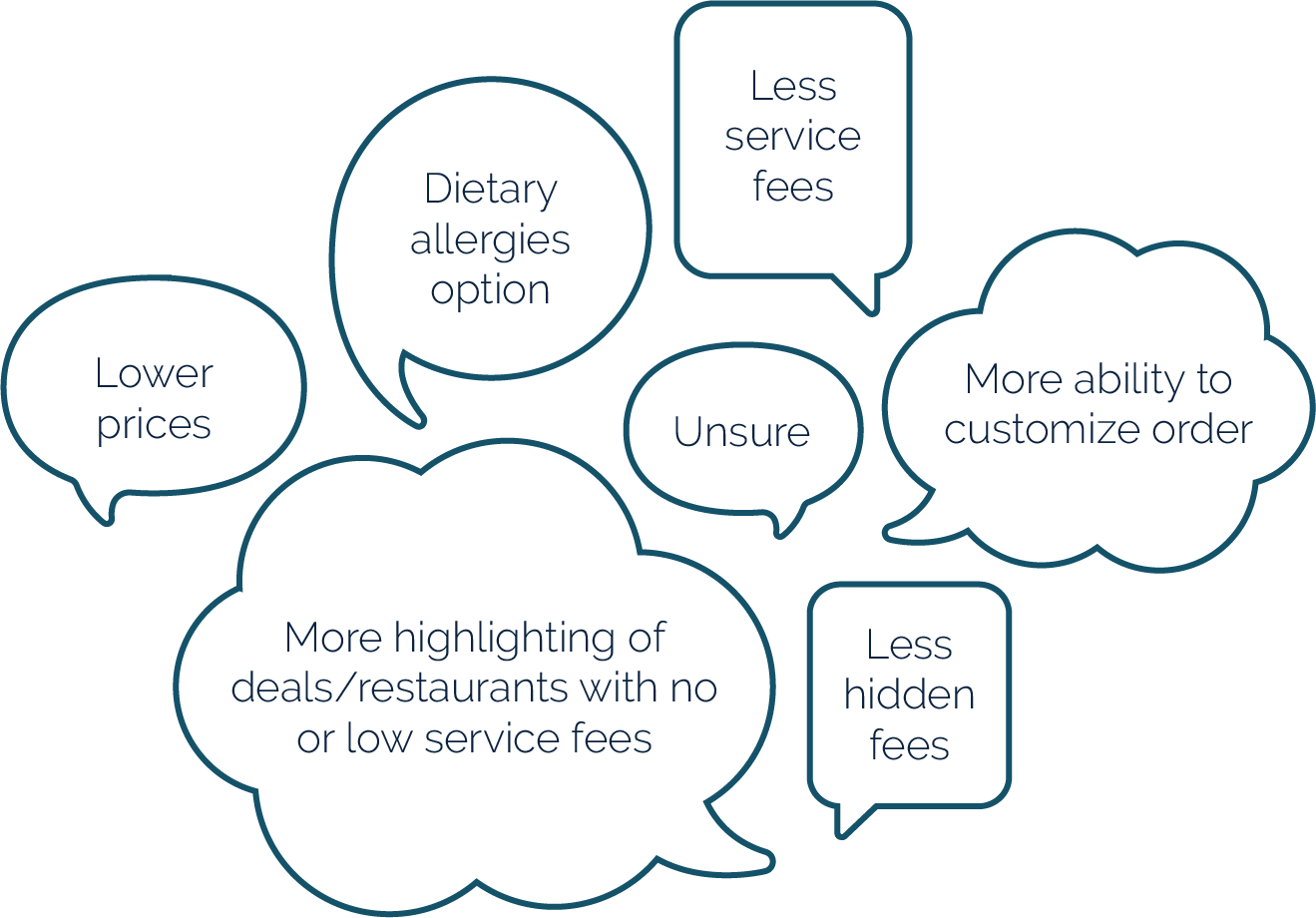
To gather more data on user app sentiment, I sent a Google Forms survey out to friends and family who fit the recruitment criteria and received 8 responses. The survey asked users about their usage frequency and patterns, and questions pertaining to the last time they ordered from one to glean insights into their most recent ordering experience.
Survey
How much did you spend last time you ordered food from a delivery app?
How (if at all) could your experience of ordering food from a mobile app be improved?
Affinity Diagramming
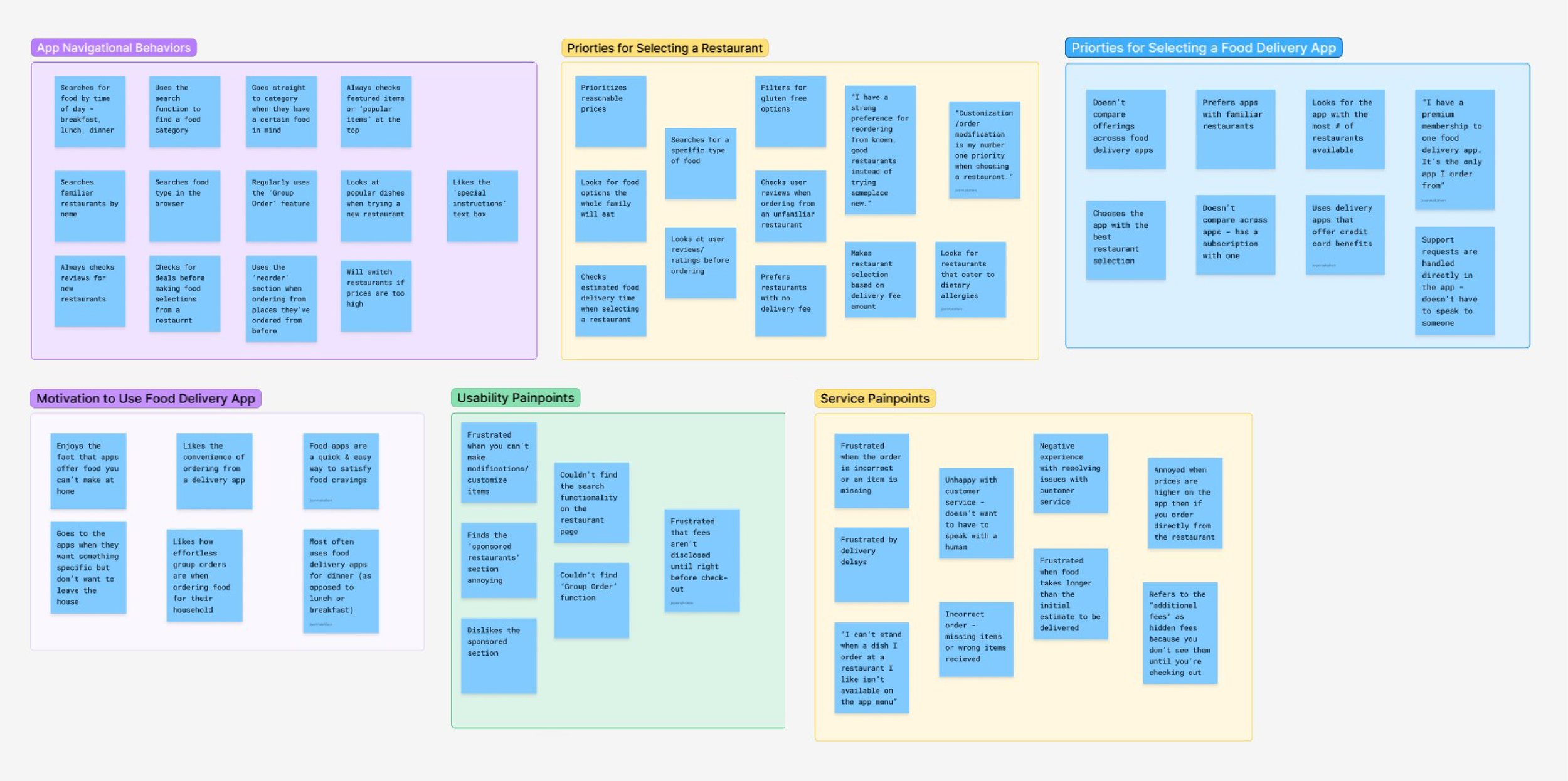
After compiling the data collected from all 3 research studies, I transferred my observations and findings onto virtual post-its in Figjam. I then grouped related data points together using a natural grouping process and gave each category a name. The categories ranged from user sentiments and pain points to navigational and restaurant selection behaviors.
This process helped to consolidate and structure the qualitative data collected, providing clarity and making it easier to identify trends.
Customization is Critical
Users want the ability to modify orders to accommodate allergies and food preferences
Key Insights
Fee Transparency
Users feel existing food delivery apps lack transparency around total costs to order
Category Expansion
Users would like to see more groupings oriented around time of day
Conclusion
Through my research, I identified three key areas of improvement for the app user experience. Should this product ever go into production, I’d encourage the design team to offer more flexibility/customization, prioritize fee transparency, and categorize food offerings based on time of day.
Findings
Challenges
While screen mirroring software is a game changer for app usability testing, it reflects the age-old adage that technology can be both a blessing and a curse.
Participants were asked in advance to download a screen mirroring app and were provided with instructions, but these instructions didn’t account for differences between devices. There were slight variations in the setup process for iPhone versus Android users, and anticipating these differences beforehand would have saved time during the actual interviews and usability tests.
I learned that conducting research virtually comes with a great deal of variability. To better account for this in the future, I plan to share as much information as possible ahead of time and to draft detailed instructions for any software or technology that will be used during the research session.